
When it comes to keeping our utility systems running smoothly, one key component does a lot of the heavy lifting behind the scenes:
the step-voltage regulator. Whether you’re charging your phone, using a laptop, or powering industrial machinery and processes, voltage regulators are essential to making sure everything operates properly. But what exactly is a voltage regulator, and how does it keep things running smoothly? Let’s break it down in a more relatable way.
In a normal environment, the voltage of the High Voltage circuit fluctuates constantly due the voltage drop derived by the line losses caused by the current being drawn by the various loads downstream. When the load is high, the voltage drops. Conversely, when the load lightens, the voltage will rise.
Some means of “regulating” these changes and keeping a steadier voltage is needed. Enter the Step-Voltage Regulator.
What Is a Voltage Regulator?
A voltage regulator is a device that keeps the voltage steady in your electrical system. Think of it as a traffic controller for electricity, making sure the voltage stays at the right level even if things around it change. It ensures that your devices get the proper voltage, which is crucial for their performance.
Without voltage regulators, devices could get too much voltage and burn out, or too little and not work at all. So, whether it’s your phone or a big industrial machine, voltage regulators are what help keep the power flow steady and reliable.
First, why is it called a “Step-Voltage” regulator? That is because almost all regulators in the utility market are setup to provide a 10% rise or 10% lowering of the input voltage in 16 individual 5/8% steps in either direction.
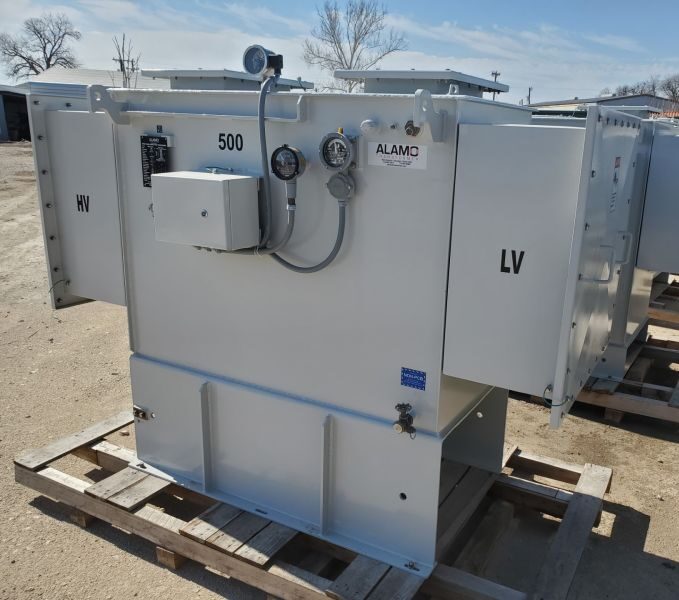
Let’s look at the main components of a step-voltage regulator:
Exciting Winding – This is the main winding of the regulator and is designed for a specific voltage or class of voltages. In a standard regulator, this winding is connected to the “incoming” or “line” side of the system.
Series Winding – This is the part of a regulator that does the actual “work” of changing the voltage up or down depending on the loading of the system. This winding has a number of tap leads at specific points.
Potential Winding – This part of the winding is used to read the voltage on the incoming and/or the outgoing side of the system.
Mechanical Tap Changer – Used to connect the Exciting and Series windings into an Auto-Transformer configuration with various amounts of turns using the tap leads of the Series Winding.
Control Panel – Like its name implies, this part is used to control the operation of the regulator and allows for certain parameters to be used to modify the overall operation of the regulator.
How Voltage Regulators Work
When a regulator is installed on a utility line, the first thing it does is to look at the voltage across the output circuit (Load side), and compared to a pre-determined voltage as set by the operator in the Control Panel. If the voltage is low, the control will tell the tap changer to move to a raise operation. After the tap change is complete, the voltage is again compared, and a decision is made to continue the tap changing. This continues until the voltage on the output side agrees with the pre-determined voltage on the control panel.
The great thing about this is that it is all performed automatically without the intervention of any human personnel.
Voltage regulators are unsung heroes in the world of utilities. They keep everything running smoothly, safely, and efficiently, without drawing attention to themselves. The next time your phone charges up without a hitch or your computer runs without any power issues, you can thank the voltage regulator for doing its job behind the scenes!
Need help with a voltage regulator for your project? Call us!! We’ve got the expertise to help keep your systems powered up and running right.